

Let’s talk about the bloat. You know — that charming feeling when your jeans, which fit perfectly yesterday, suddenly feel like they’ve been swapped for toddler-sized denim. Or when your stomach looks like you’re smuggling a small balloon after eating something that should have been healthy.
Yeah. That bloat.
I’ve been there more times than I can count — that frustrating mix of feeling heavy, puffy, and just off. At one point, I even joked that my body had its own internal weather system: one wrong bite, and boom — instant storm.
For a long time, I thought bloating was just part of being human. “Everyone gets bloated sometimes,” I’d tell myself while unbuttoning my jeans under the dinner table. But after years of dealing with it, I started to wonder: What if my body was trying to tell me something?
Spoiler alert: it was.
The Science Behind the Bloat
Let’s clear one thing up — occasional bloating is totally normal. But when it happens often, it’s a sign that something in your body is out of balance.
The main culprits? Inflammation, gut imbalance, and sluggish digestion.
Here’s how it works: inflammation isn’t always bad. It’s your body’s natural response to injury or stress. But when inflammation becomes chronic — from poor diet, stress, or environmental toxins — it can mess with everything, including digestion.
Your gut lining becomes irritated, your microbiome (that community of good bacteria) goes rogue, and before you know it, even “healthy” foods start causing discomfort.
Your belly feels tight, your energy dips, and you might even start retaining water. Basically, your body starts waving a white flag — and bloating is its way of yelling, “Help me out here!”
Turn On Your Body's Fat Burning Power House!
My Turning Point
For years, I tried every quick fix under the sun. Cutting carbs. Going gluten-free. Drinking herbal teas that tasted like lawn clippings. Even doing “bloat detoxes” that mostly just made me hangry.
Then one day, after yet another night of “I swear I only ate soup, why do I look six months pregnant?”, I decided to stop obsessing and start learning.
So I did what I always do when I hit a wall — I dove into research. I wanted to understand why my body was bloating, not just how to hide it.
What I found blew my mind: certain foods don’t just avoid inflammation — they actively fight it. They calm the gut, support digestion, and help reduce water retention naturally.
When I started eating more of those foods consistently — and less of the inflammatory stuff (looking at you, processed snacks and sugar bombs) — everything changed. My digestion improved, my energy returned, and the dreaded “post-meal bloat” became the exception, not the rule.
The Sneaky Inflammation Triggers
Before we dive into the feel-good foods, it’s worth knowing what’s working against you.
Some of the biggest bloat culprits are:
Processed foods – loaded with sodium, additives, and preservatives that cause water retention and irritation.
Refined sugar – feeds bad gut bacteria and triggers inflammation.
Dairy – for many people, lactose is hard to digest and can cause gas and swelling.
Artificial sweeteners – sorry, but your “sugar-free” snacks might be sabotaging your stomach. They ferment in the gut and cause bloating.
Too much gluten or fried food – heavy, slow to digest, and inflammatory when overconsumed.
Now, here’s the fun part — replacing those with foods that actually make you feel amazing.
The Anti-Inflammatory All-Stars
These foods are not fads. They’re backed by science for reducing inflammation, balancing digestion, and keeping your belly happy.
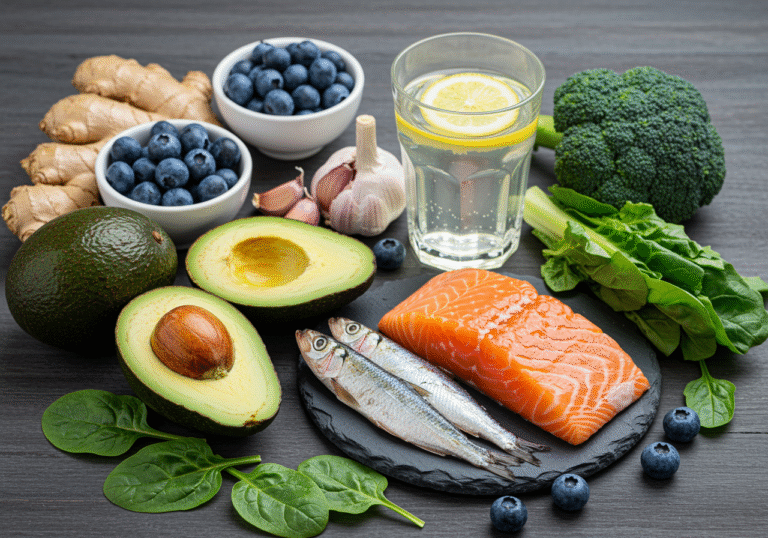
1. Avocados — The Creamy Gut Hero
Packed with healthy fats and potassium, avocados reduce water retention and soothe inflammation. Plus, they’re rich in fiber, which helps move things along (you know what I mean). I like to mash half an avocado on toast with lemon and sea salt — simple, delicious, and bloating’s worst enemy.
2. Blueberries — Tiny But Mighty
These little gems are full of antioxidants called anthocyanins, which protect your cells from oxidative stress and calm inflammation in the gut. Add them to smoothies, yogurt, or oatmeal — your microbiome will thank you.
3. Garlic — The Anti-Inflammatory Powerhouse
Yes, it makes your breath questionable, but it’s worth it. Garlic contains sulfur compounds that fight inflammation and support detoxification. Bonus: it also acts as a natural prebiotic, feeding the good bacteria in your gut.
4. Ginger — Nature’s Bloat-Buster
If bloating had a natural enemy, it would be ginger. It stimulates digestion, speeds up stomach emptying, and reduces gas. Try fresh ginger tea after meals — or if you’re like me, chew a small piece while cooking and pretend it’s candy (don’t judge).
5. Leafy Greens — The Detox Dream Team
Spinach, kale, and Swiss chard are loaded with magnesium, which helps muscles — including your digestive tract — relax. They’re also rich in chlorophyll, which supports detoxification and reduces inflammation.
6. Fatty Fish — The Omega-3 Fix
Salmon, sardines, and mackerel are rich in omega-3 fatty acids that fight inflammation at the cellular level. They help reduce bloating caused by chronic inflammation and fluid retention.
7. Lemon Water — Simple But Powerful
Before you roll your eyes at this wellness cliché, hear me out: lemon juice supports bile production (which aids digestion), helps balance stomach acid, and acts as a mild diuretic. It’s not magic — it’s chemistry.
My “Beat the Bloat” Morning Routine
Once I started combining the science with daily habits, my bloating went from a daily drama to an occasional inconvenience.
Here’s my go-to morning routine for a calm, happy belly:
Warm lemon water first thing — hydrates and wakes up digestion.
5–10 minutes of gentle movement — yoga twists or a short walk to get things flowing.
A fiber-rich breakfast — like oatmeal with chia seeds, blueberries, and a sprinkle of cinnamon (anti-inflammatory gold!).
By mid-morning, I already feel lighter and more energized — and that sluggish, heavy feeling? Gone.
The Mind-Gut Connection
This might surprise you, but stress is one of the biggest culprits behind bloating and inflammation. When you’re stressed, your body diverts energy away from digestion — because it thinks you’re running from danger, not eating lunch.
Over time, that slows your gut motility and throws off your microbiome balance.
So yes — that tense workday, that lack of sleep, that constant pressure to “do more”? It’s not just in your head. It’s in your belly too.
Practicing mindfulness, deep breathing, or even just slowing down at meals makes a huge difference. I call it “eating with my nervous system turned off.”
Real Talk: There’s No Magic Fix
I wish I could tell you there’s one food that will fix everything. But the truth is, beating the bloat is about consistency, not perfection. It’s about feeding your body more of what it loves — and less of what inflames it.
You don’t need to overhaul your diet overnight. Start by adding one or two anti-inflammatory foods each day. Swap processed snacks for nuts, trade soda for lemon water, and eat slowly enough to actually taste your food.
Small steps, big difference.
Final Thoughts
Bloating isn’t just about your stomach — it’s your body’s way of asking for balance. When you start listening to those signals, everything shifts.
You don’t have to live with that uncomfortable, “ugh, I can’t button my jeans” feeling. By nourishing your gut with anti-inflammatory foods, moving gently, and managing stress, you can bring your digestion — and your confidence — back to life.
So next time you feel bloated, skip the crash detoxes and “miracle teas.” Instead, reach for real food, take a few deep breaths, and remember: your body isn’t working against you. It’s working for you — you just have to give it the right support.
Here’s to less puff, more glow, and feeling light from the inside out.